
Aspects of the Queen of Heaven and Lady of Waters
Art and Magic at St. Brendan's of Lough Rea
Over these past few years we traveled to Galway several times for doctor appointments. It's four hours each way, but we couldn't stay. But we likeGalway, so at the end of February we took an overnight trip to visit wells and windows.
Athenry is an old town, the name implies its strategic "Ford of the King." Since the Middle Ages, the walls and castle were repeatedly attacked, the last time in 1572. Wikipedia says the town “did not begin to truly recover till the late 1990s.”
We stayed in the lovely Old Barracks, a repurposing of exactly what you think it was. In the hotel's restaurant I ate the best onion bhaji burger ever, and the next morning Artemis had a Full Irish breakfast re-imagined in vegetarian, including delicious white and black sausage. A culinary miracle.
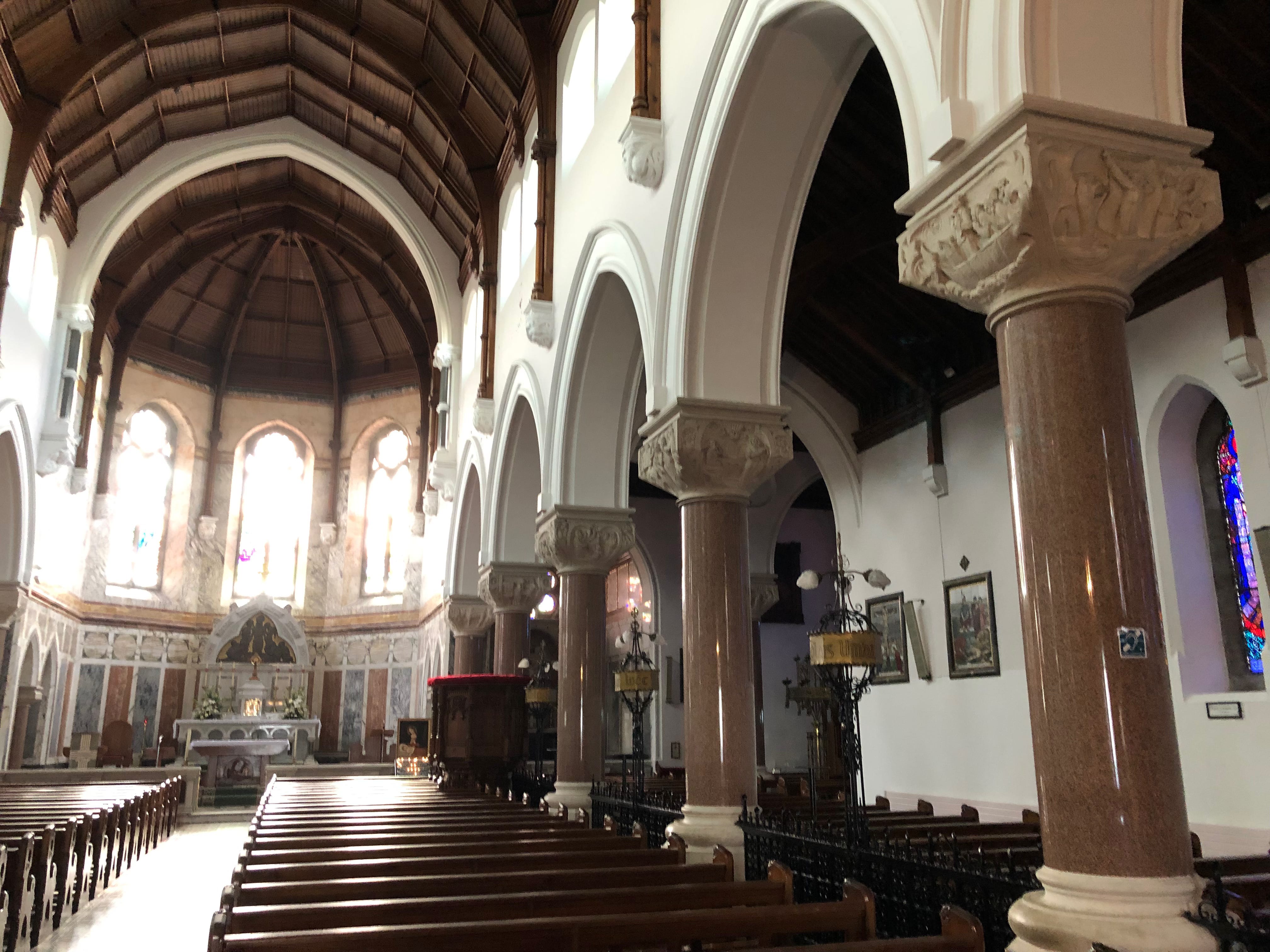
A few miles away is Lough Rea, where we went to see the windows of St. Brendan's Cathedral. The church commemorates the 6th century founder of a church and university on the site. This he did after he discovered America.
Those of us who like Neo-Gothic architecture and Arts and Crafts —honestly, who doesn't?—are fortunate these movements coincided with a massive Catholic church rebuilding effort in Ireland.
The grounds of the cathedral contain a few unremarkable monuments in a pretty lawn overlooking the lake. All of which is ruined by this torture tableau.
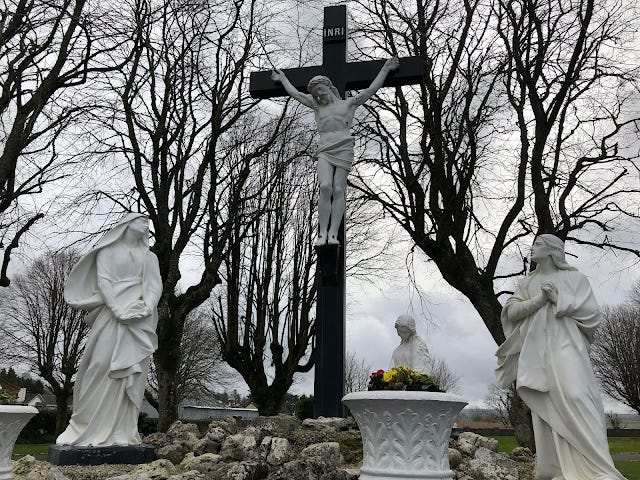
I believe in freedom of religion as much as anyone, but I wish they would keep this snuff porn away from children.
As I said, we came for the windows. My photos of the cathedral interior are terrible. There are better ones at Roaringwater Journal, as usual.

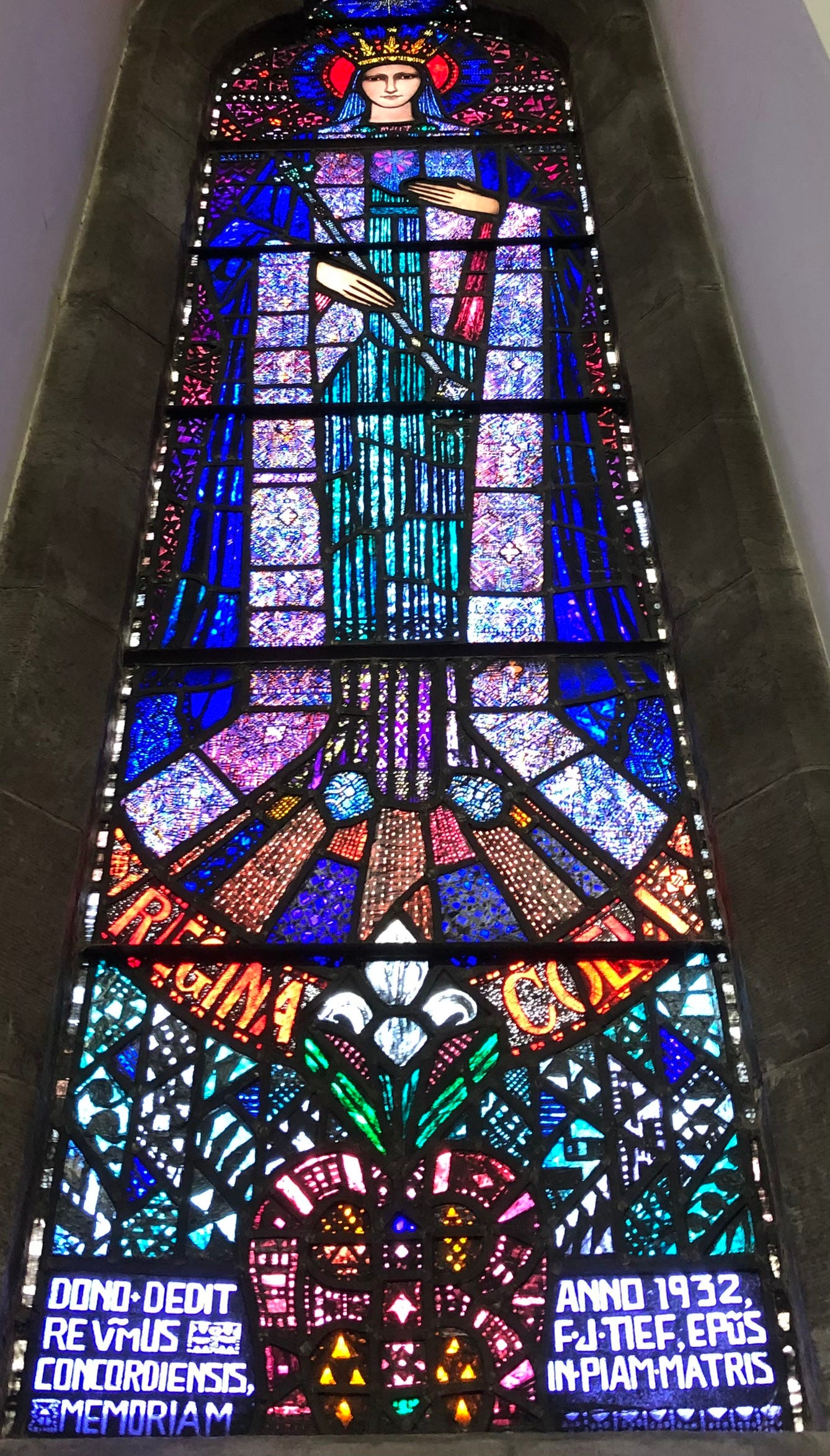
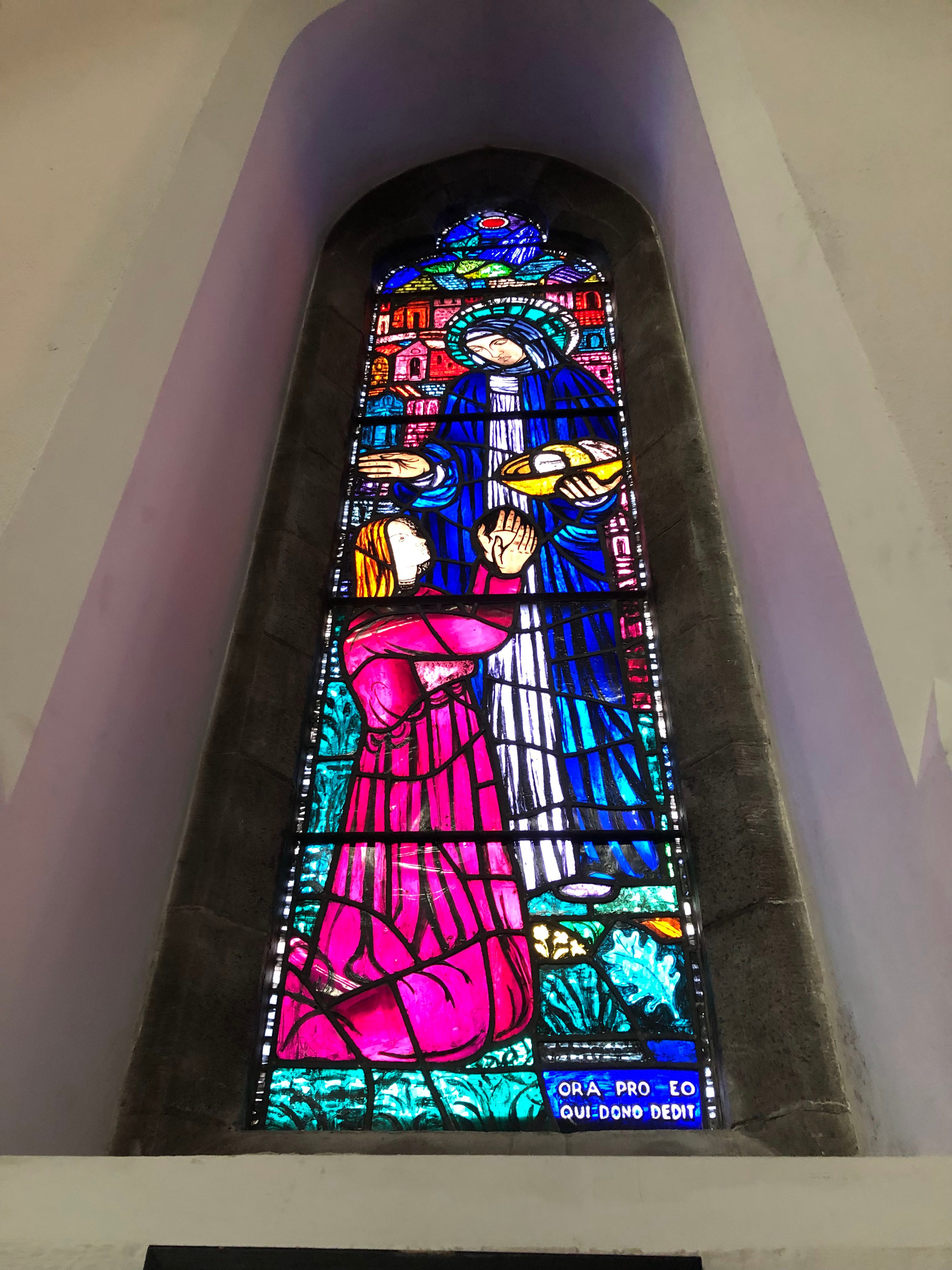
I know it's ridiculous to post photographs of windows. You have to be there to comprehend their marvelous magic.
Speaking of magic:
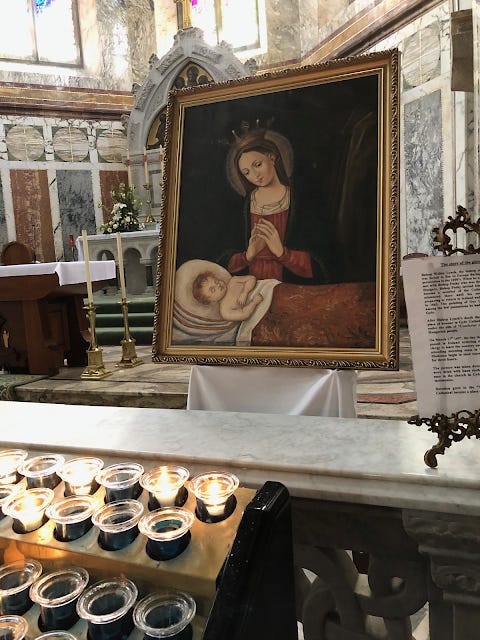
According to that sign, this painting was rescued from the previous cathedral before it was sacked in the Reformation and sent away to keep it safe. Far away in Hungary, the Virgin cried real blood tears as the church burned. Now she’s home.
The Church knows people come for the art. That's what the art is for. In this cathedral, immediately on entering you see this elaborate list of art works and artists.
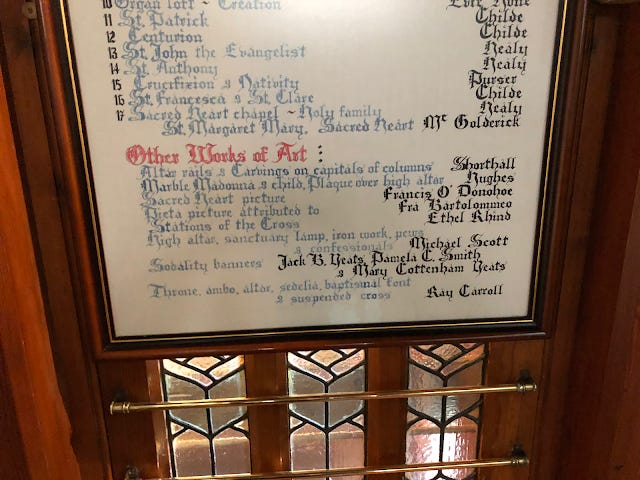
Speaking of magic: Down at the bottom, notice "Sodality Banners?" This is a Sodality Banner:
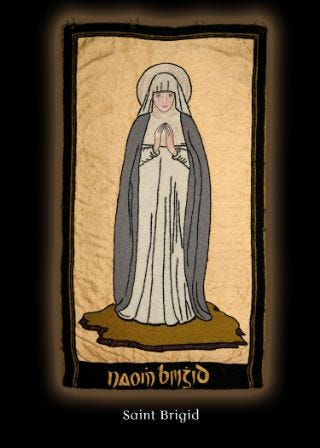
These banners were designed by Jack, Lily, and Elizabeth Yeats, and ... Pamela Colman Smith? The artist behind the Rider-Waite tarot, the world's most famous esoteric work of art? Yes, that Pamela Colman Smith.
Smith worked on this project five years before the commission from A.E. Waite in 1909. Four years before that in 1901, she had joined the Golden Dawn, secret society and progenitor of much of modern paganism. She wasn't the first, or last, pagans to create ecclesiastical art. (At the end of her life, she converted to Catholicism.)
According to "Pamela Colman Smith and the Yeats Family," (Joan Coldwell, Canadian Journal of Irish Studies Nov 1977) Colman Smith contributed a design of St. Brigid to art collective that created these Sodality Banners.
"Sodality" refers to the community, usually women, who produced the sacred garments of priests, altar clothes, and banners like these, carried in procession. (More banner images here on the cathedral's website. )
When I think of the millions of people taking buses from Dublin to the Cliffs of Moher, while passing by this treasure house. Most Irish people I know have never heard of it either.
I know it seems contradictory for an apostate like me to enter these sacred sites to gawk at art and ridicule practices. But I took to heart long ago the motto of College Five: ars longa, vita brevis! I hope this cathedral stands for another thousand years. I don't care what meaning people make of it, as long as they fall to their knees.