On the Benefits of Cold Water Swimming
A California girl learns about Irish swimmers
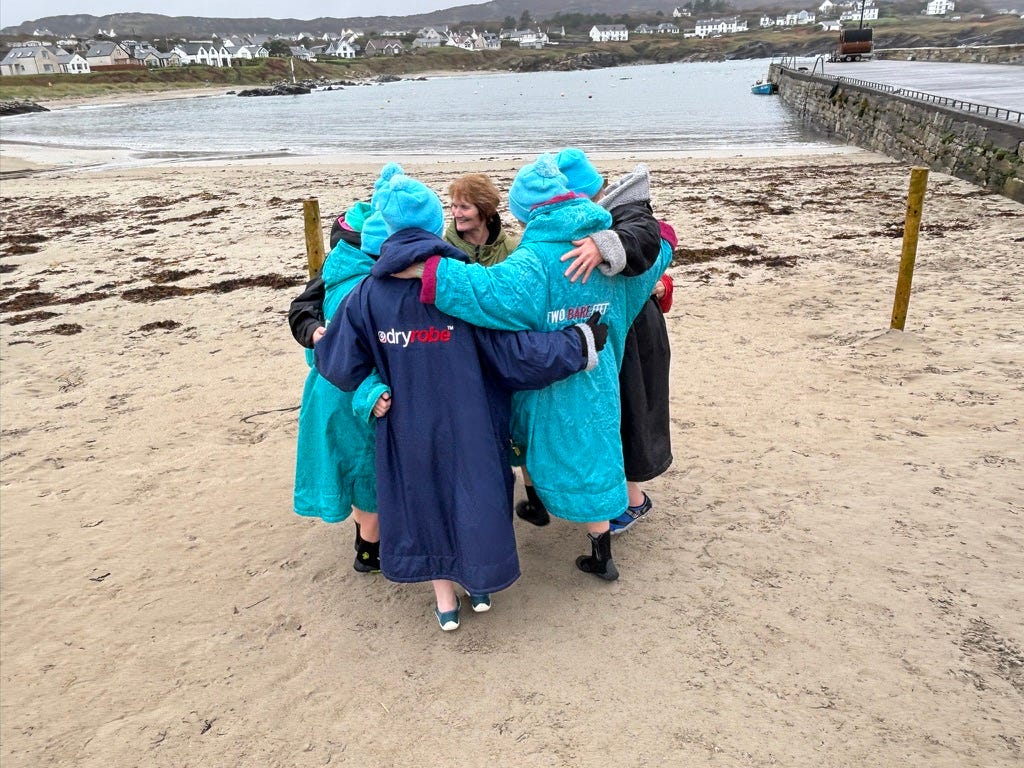
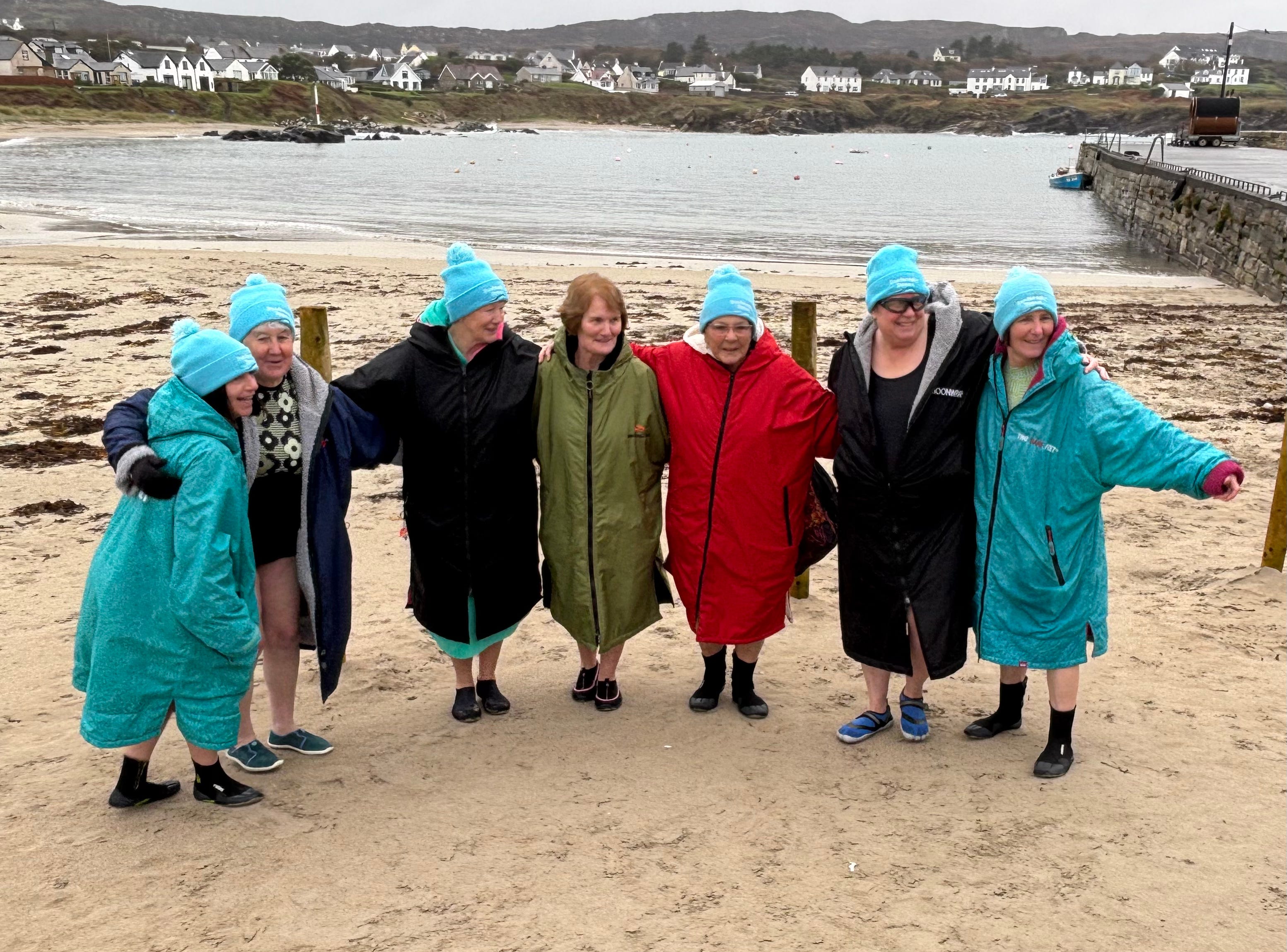
I swim with some old ones at Portnablagh pier.
Each day at eleven, we gather.
The sky’s often gray and the wind quite severe,
As into the water we swagger.
There’s Orla and Aileen, Fiona and Ned,
Liam, and Aisling McBride,
Clare from Clonmore and Tim from Horn Head
We all miss Dermot, who died.
When I was young, I avoided the cold.
A behavior I sorely regret.
Now everything hurts, like it does when you’re old
But I’ll swim any water that’s wet.
I shriek and go under the bone-chilling swell.
We all judge each other quite wacky.
I can’t help but think of death and farewell
Like always I do when I’m happy.
The days they pass by inevitably,
But dark nights cause me no fear.
When the final tide turns, my last memory will be
Swimming into the sun at the pier.
Every time I swim in the sea, I thank my mother for giving me swimming lessons. Besides the mental health benefit of death contemplation, I like kicking around, chatting with my neighbors in wooly hats. I like the euphoria as I walk out of the sea with my “Wild Atlantic Tan.” I swim at the nearby hotel pool too, and always leave there with some new creative idea to bring to my writing.
I owe all this to my mother bringing me to the Clovis high school pool 60 years ago. Clovis was rural then, and she was afraid that without swimming lessons we could drown in an irrigation canal, something I remember actually happening to a kid when I was small.
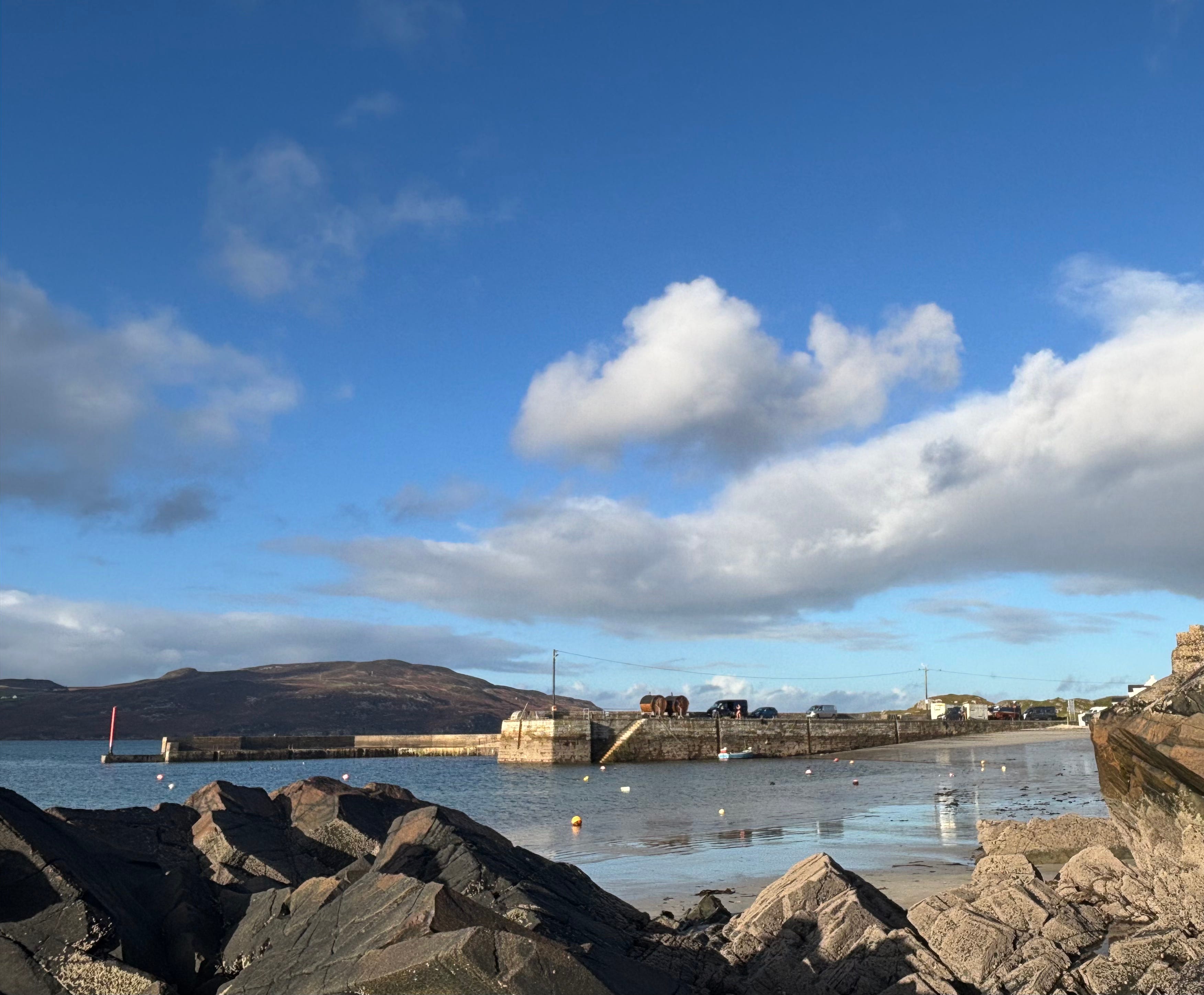
A few months ago, I was crossing the lane toward Portnablagh beach and paused as a car pulled up with the window down. The driver was a woman of about my age. “Are you going swimming with the group?” she asked in a Scottish accent.
“Yes, we swim every day at 11. Would you like to join us?” I always invite people to join us, even though they think we are crazy and are the first persons to tell us so.
Instead, she said, “I’d like to, but I don’t know how to swim.”
“That’s no problem. Many of us just can’t swim either. We’re all here together, so it’s safe.”
I was ready to walk on as I was standing there in my dry robe, getting my swagger on. But she wanted to tell me a story. She said that her people were from Creeslough, and she had recently moved back. Her father had been a fisherman, but needed to give up that life and work in Glasgow. There she was born and raised.
The church had a youth group for poor city kids, and her brothers and sisters started swimming lessons in the municipal pool. But when they came home the first time, her father beat them for trying to learn to swim.
Decades later her eyes welled as she remembered the beating and her father’s terror. She was afraid, not of the cold or drowning, but her father’s superstition. Defiantly driving to the pier and meeting one of the Dunfanahy Dippers took courage.
I had heard that Irish fishermen can’t swim. To my mother’s daughter, it’s a paradox. Don’t you want to swim so you won’t drown? But when families have lost more than one man in a generation, sometimes three generations of men in one catastrophic day, I see why people try to impose order on that deadly chaos. Learning to swim means you’re thinking of drowning; you’re not believing in the skill and strength of the boat; you’re showing bad faith, and deserve the uneasy souls beneath the waves who pull you down.
I couldn’t reply except to repeat she was most welcome, and that she wouldn’t be alone. She didn’t go in that day, but I hope someday she will find her swagger.