
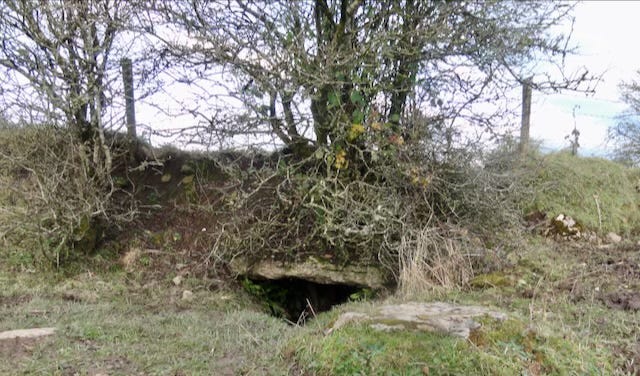
That little hole at the side of a Roscommon field is one of my favorite places in Ireland. It’s called Oweynagat (Cave of the Cats). In Irish folktales the cave is an entrance to the Otherworld.
The RTE series Almanac of Ireland includes a visit to the cave by Manchán Magan. He enters the cave by himself and without a light, and I sense that he had more of an adventure in there than he lets on.
Since the first time I visited the cave in 2012, the nearby Cruachan Aí Rathcroghan heritage center has brought their geological and archaeological research to the public online. In a way, I wish this video were not so good, so that visitors had less of an idea what to expect.
The cave at the side of a country lane is easy to find now, and Cruachan Aí has installed an interpretive plaque. They’ve also restricted cave tours “pending a health and safety review.” I suspect by now the cave has been loved to death. The last time I was there I had to haul out garbage left behind by pilgrims. Not every sacred site needs to be a clootie tree or a memorial to your beloved dead. FFS.
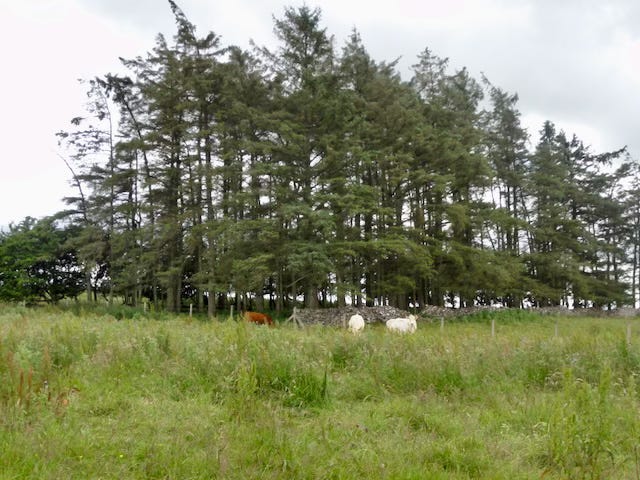
Back then, the cave was not marked on a map and our guide prepared us. She told us a tale from the Táin Bó Cúailnge, Ireland’s epic story cycle about the giant cats that lived in the bottom of the cave roaring out to challenge Ulster’s greatest heroes. She also told us a little about the Morrigan, whose name is sometimes translated as “Great Queen.” She is an Irish goddess who sometimes appears as a crow. As our guide told her stories, the crows flew in and out of those pines, croaking.
There are other stories about how the cave is related to the Irish festival of Samhain, which is celebrated as Halloween. If you’re interested, you’ll find those stories.
Entering the cave is a commitment on all levels. You’ll get filthy with a fine silty mud. Bring a change of clothes, or—as I did the next year—go down in your underpants. Emotionally, you need to climb a rough stone cliff backwards in the dark; there's no stronger metaphor for Shadow Work than that. Spiritually, you might find something down there you’d never expect and might have a hard time getting rid of.
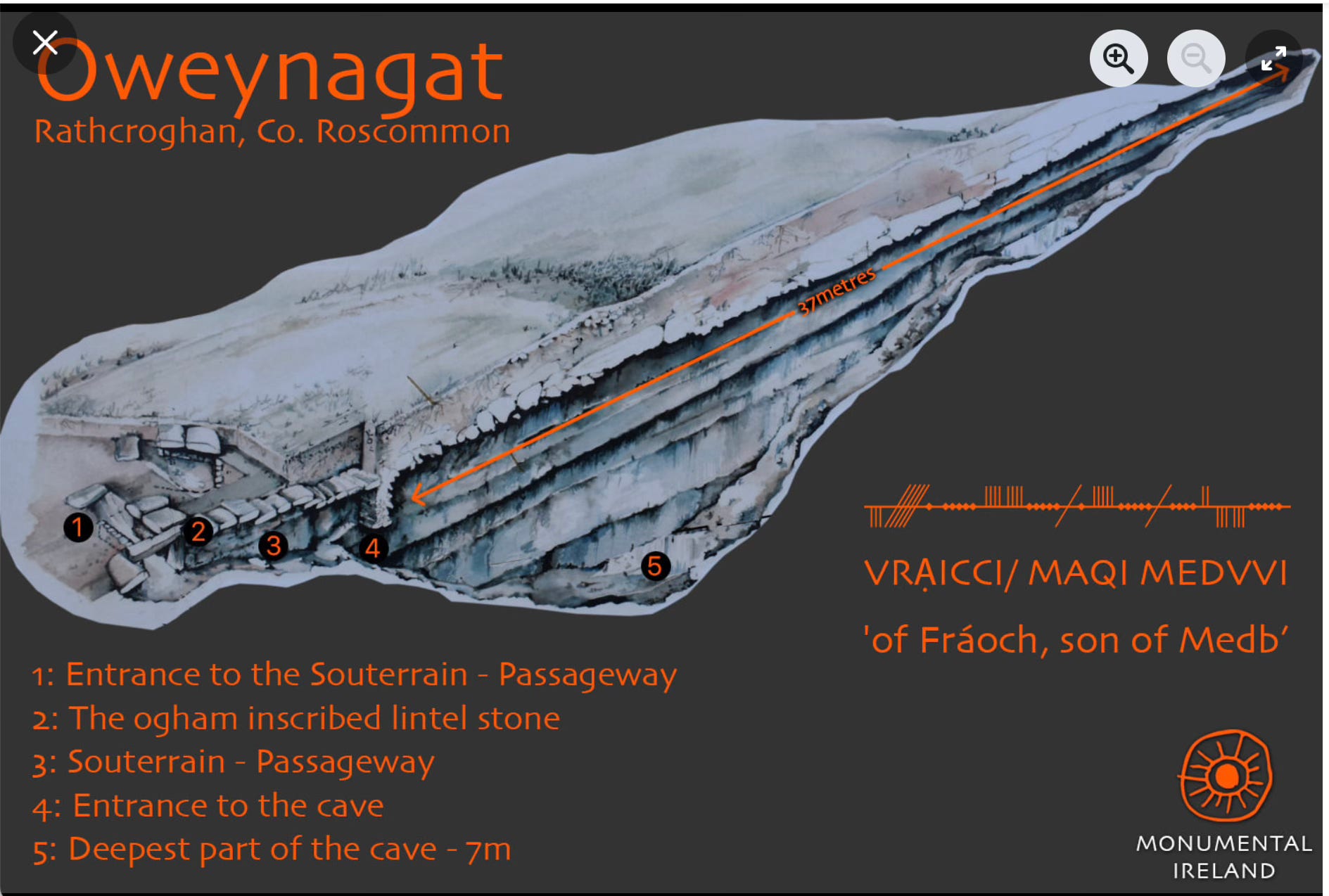
Number 1 is the cave entrance, the other side of the hole in the picture at the top of this post.
Number 2 is a lintel stone that’s horizontal now, but was once a standing stone carved with Ogham letters reading “Freach Son of Meave.” The first written words in Irish wasn’t literature, but men marking territory.
Number 3 is the part of the cave that lulls you into thinking this is far easier than you were warned. It’s a sloping stone-lined souterrain that might have been constructed as a storage cellar a thousand years ago. Some archeologists propose the souterrain was built to change the direction of the original cave, bending it so the sun did not enter it.
Number 4 is where you turn around and guide yourself down backwards into the dark. You know you’re at the bottom when you’re up to your ankles in mud. You can wear a light on your forehead, but it’s little help.
Once at the bottom, your light can show you how the cave opens up above your head in a perfect corbelled ceiling. It looks to me like the arch of a woman’s vagina, what the Roman’s called “the fornix.” It’s a natural version of the corbelled ceilings of Newgrange and Carrowkeel.
When I first visited the cave, it was thought that road works had collapsed the end of it, but subsequently we learned that this is exactly how the cave has always been. A tiny little pocket in limestone, shaped exactly like a woman’s secret.
That first time I visited, the guide allowed me remain alone behind in the dark. Later I wrote a poem about what happened to me there.
I entered the cave of the Corvid Queen
Her ladies waited in pines, calling “Back Back Back.”
Doughty, I undressed
Crouched and bent
My bare feet finding a fissure and a stone.
They tell me the stone shouts out a man’s name,
But in here women will whisper.
Down into the dark and wet, sliding and holding
Down and in, bare feet finding
Stones and rocks and mud and magic.
At the bottom, in the center, I find one sharp rock to lean on.
High above, too far for fingers’ touch:
The arch, a fornix, a vault, a chamber.
Here I rest in the black, not to die, not to rot, but speak at last
With the Corvid Queen.
I entered the cave of the Corvid Queen
On a young winter’s night when fires burn unbanked
Welcoming home beloved dead.
I opened my ears and attended her voice.
I heard her voice clearly, like mine right now.
“Join my people and eat our food. Dance to our music, sleep in our beds.”
So spoke the Corvid Queen, and I saw her cabin
Not dark, but golden with firelight, and bright with loving eyes.
Hot meat, warm bread, cold ale.
I danced with the daughters of the Corvid Queen and sang with her sons.
They dressed me in great woolen shawls and smooth leather shoes.
In one night, I lived a long lifetime, welcomed to the cabin of the Corvid Queen.
Near dawn my friends fell around me, sleeping and fading from sight.
I gave my gratitude like a good guest, made to leave, to never return.
“Take me with you,” said the Corvid Queen
“Take me to the western edge of the western island.
Where a palace faces the sun at the bend in the river.
Bring me where the fires burn and the mountains move.
Take me to my crow women of tree and sea.”
Long ago, my teachers taught me: sing and dance, dare even to eat,
but never make a bargain with the Corvid Queen.
I took one step in my smooth leather boots, but they dried to dust, my toes stuck in the muck.
No shawl neither, no cottage warm, nor meat nor bread nor ale.
Just me alone, in a cold cave, my naked skin gray against stones.
I tore my feet from the clenching mud, and twisted my flesh from the sanctuary shelf.
I aimed to clamber the rocky slope, toward air and light, and the winter’s evening.
“Back Back Back,” called the Corvid Queen.
“Take me with you, Back, Back Back.”
“You danced, you sang, took my meat, bread, and ale.”
She flew in my face, black wings flashing, her dark cloak soaked in blooded waters.
My heart in my throat, my feet scraping raw,
I climbed away from her commanding call.
Halfway up I heaved too high, struck my forehead, and left my blood.
My unfeeling hands like claws, I dragged onward, and there: light, at last.
“Back Back Back” she called from below, but I left her bereft, in the corvid cave.
On the first of November I flew home to the west
To the western edge of the western island.
Here I built a palace facing the sun, at the bend in the river.
Here I consider the corvid queen
And her ladies waiting in the pines, calling “Back, Back, Back.”
This poem appears in the latest issue of Pagan Ireland, a magazine we look forward to every quarter. The printed issues always sell out, but you can buy the pdf version where ever you live.