
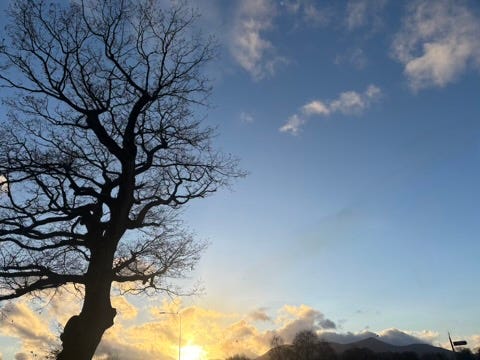
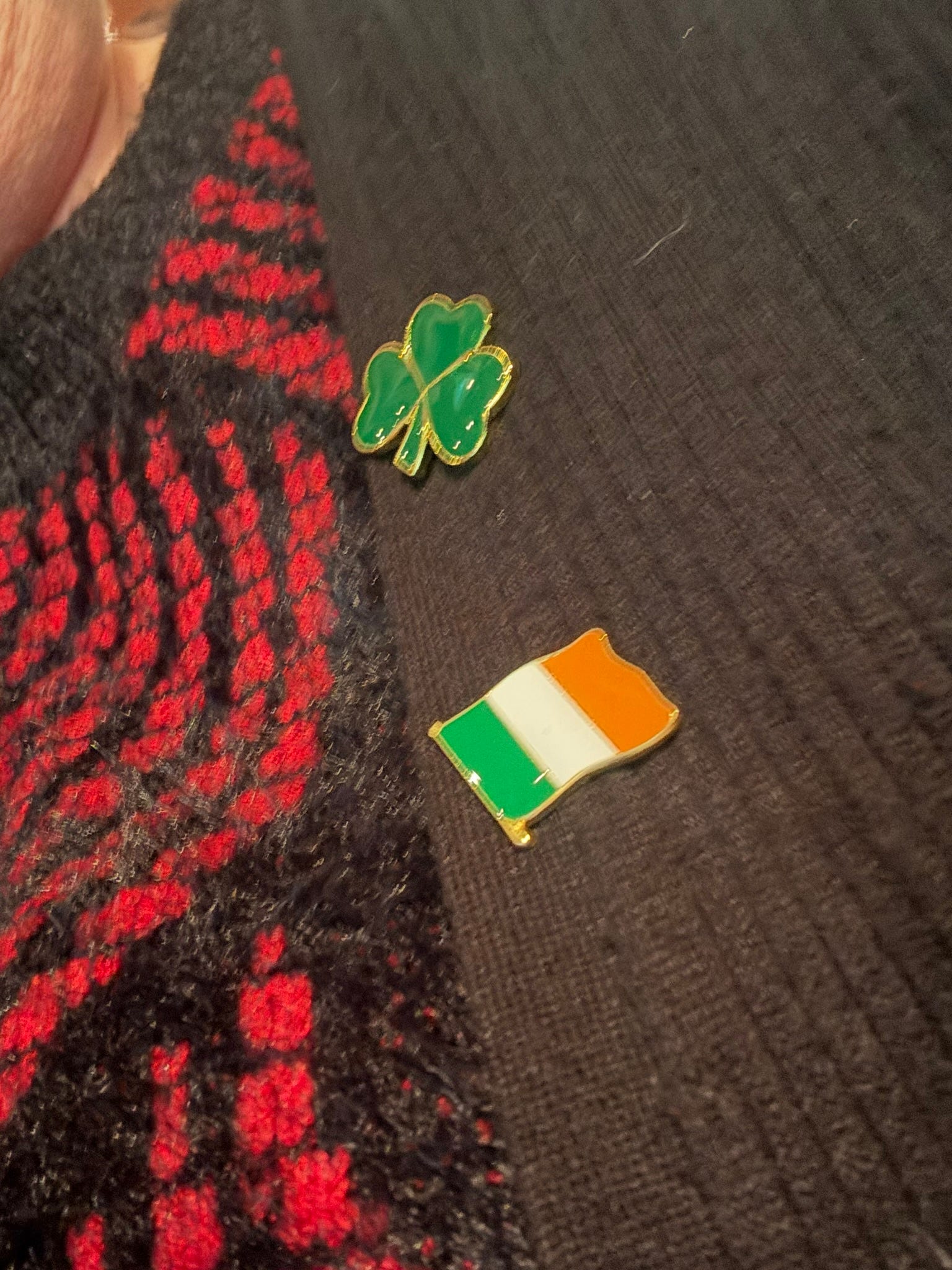
The other day I declared my fidelity to Éire, known as Ireland, in a searmanas saoránachta (citizenship ceremony) and became a naturalized citizen.
I never expected to become an Irish citizen and didn’t know I qualified until late last year. I’ll never be really Irish, but neither can I be arbitrarily deported. Since the ceremony, I’ve pondered what this state change means to me. I wrote some beautiful paragraphs about “belonging,” and how it is a little like getting married, what with a piece of paper and if it means anything. Not worth sharing really, especially when so many people I know can’t leave where they live, but want to.
Then I started to think about the Irish passport.
An Irish passport means I have a freedom to travel that other Americans don’t share. Most Americans like me traded their freedom to travel for medical insurance. In modern times , freedom to travel is mostly enjoyed only by the rich, or most often suffered by the poor. But freedom to travel is an ancient human right; it might be the oldest.
Human beings evolved as emigrants. I feel those traveling ancestors in my chest as I point the hood of my car down a new narrow road. As soon as they could, humans traveled everywhere, adapting to every African biome, and then beyond, chasing receding glaciers in Europe and Asia and then toward the eastern continents.
I came across the idea of freedom to travel as a human right in The Dawn of Everything by David Graeber and David Wengrow, a book that reframed “freedom” for me. In addition to freedom of travel, the authors show evidence that early humans developed the freedom to change social structures depending on the time of year, and the freedom to disobey authorities without consequence. Familiar freedoms like speech, religion, and assembly are attenuated derivatives of these freedoms.
One memorable example in Dawn of Everything is what happened in American history between the Cahokia culture (700-1400 CE) and the arrival of Europeans in 1500 CE. We know little about the Cahokia except that thousands of people toiled for a few hundred years to build “mounds” in the Mississippi flood plain, one basket of dirt at a time. Presumably, an elite group inspired them to participate in these infrastructure projects. After a population peak in 1200 CE, the Cahokia stopped building mounds and the people moved. There’s no evidence of war, famine, pestilence, or flood.
Maybe they simply felt they had the right to leave. Their descendants developed a diversity of political structures continent-wide, along with a network of inter-tribal clans that allowed people to leave where they were born, and know that they would be welcomed by clan-kin far away.
I’ve experienced something like clans, because gay men and lesbians belong to many nations of straight people but find our clan-kin anywhere if we can find the other gays.
I first arrived in Ireland into a clan of Cork lesbians. I met J through a lesbian website in 2012, and later that night we sang songs and told each other love stories from our own lives.
J and her wife met me for lunch before the ceremony in Killarney. We sat in the dining room of The Lake, a hotel perfectly sited for the picaresque view that literally created the tourism industry 200 years ago. The dark MacGillycuddy Reeks framed the misty lake and castle ruins of J’s ancestors, the McCarthy Mór.
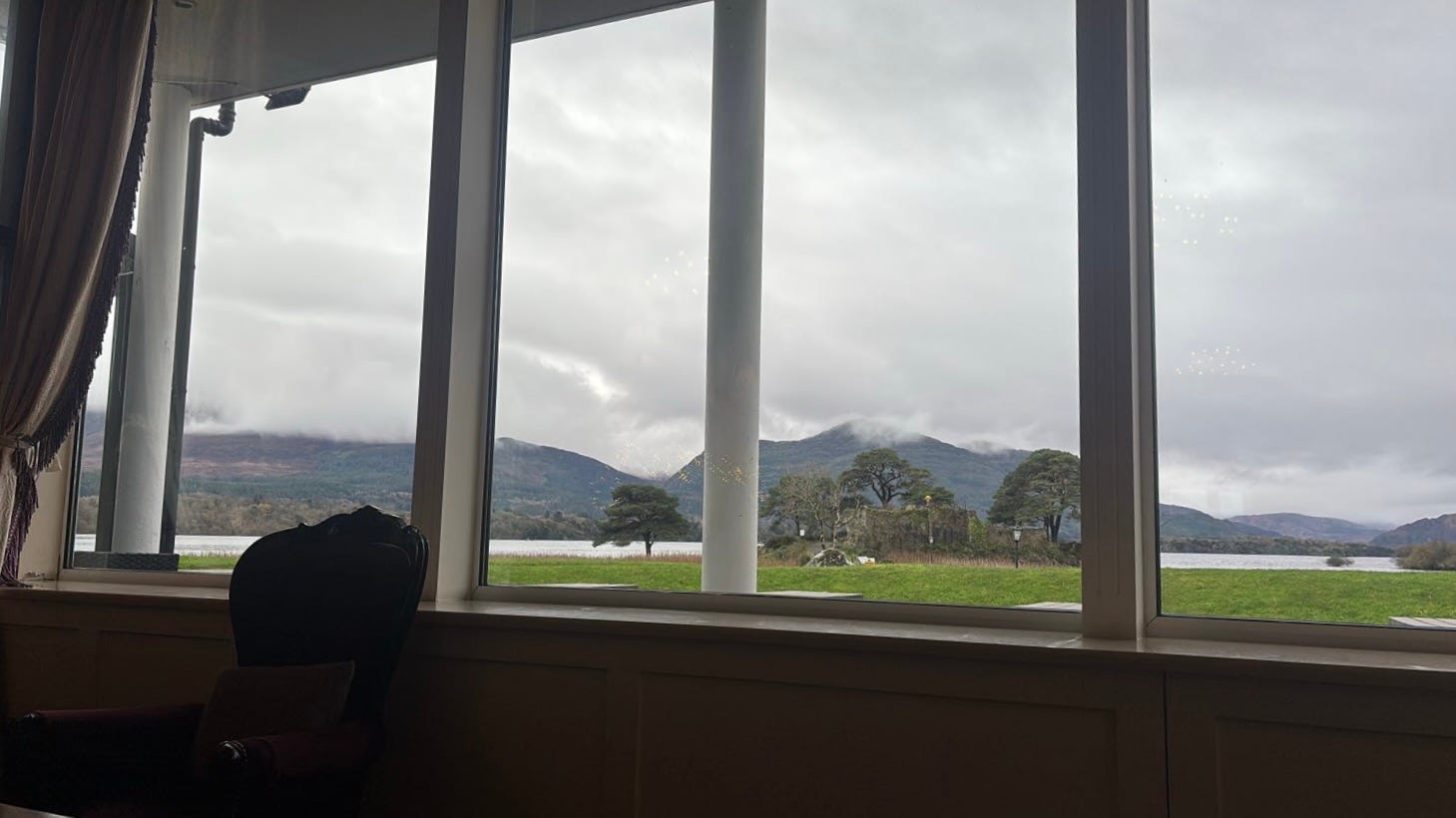
We reminisced about our years of friendship, and how far we had come. Little Linda Hooper from Fresno, California never imagined she could visit Ireland, let alone live here. We kept remarking on how beautiful it all was.
“I love those peaks,” I said, insufficiently. J replied that as beautiful as they are, she had to leave her ancestral home of Killarney. I knew that J moved away because she was a lesbian and in the 1980s her home town would never allow her to live free.
“You must have wanted something bigger than mountains,” I replied.
Irish people ask me all the time how I could leave another famous tourist destination, especially in contrast to the “shite weather” of Donegal.
“I didn’t move to Ireland for the weather,” I usually say, but that’s a lie. I did move here for the weather—and the wind and the scent of moss on the floor of the forest, and a fire on the grate at the end of the day.
Most of the immigrants who recited the pledge with me in the auditorium also came from warmer places. I tried to focus, but was carried away on the murmuring of a thousand people: “… declare my fidelity to the Irish nation …faithfully observe the laws… respect its democratic values.” One man behind me, his voice louder than the rest, declaimed each phrase as if he had already memorized it.
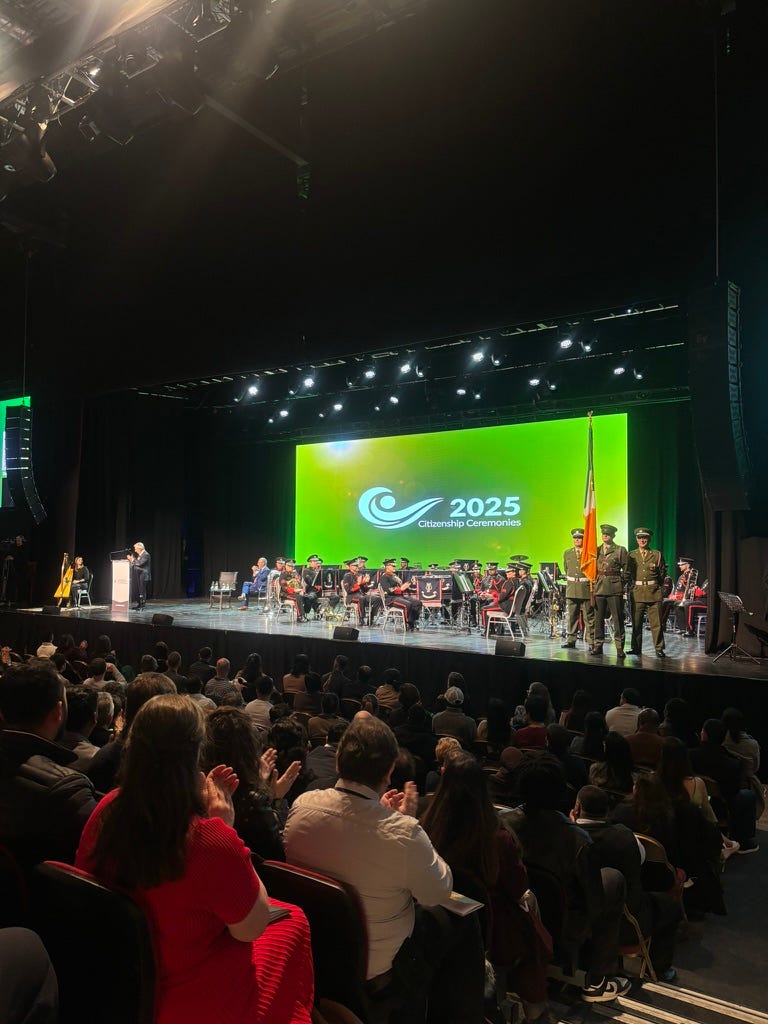
During the ceremony, TD Jerry Buttimer delivered a wonderful speech that, of course, I wept all the way through. J later told me he is gay, with a husband and everything. Jerry taught us that the Irish word for citizen is rooted in the word for freedom. The English word for citizen comes from associations with the city, and earlier words for home and settlement.
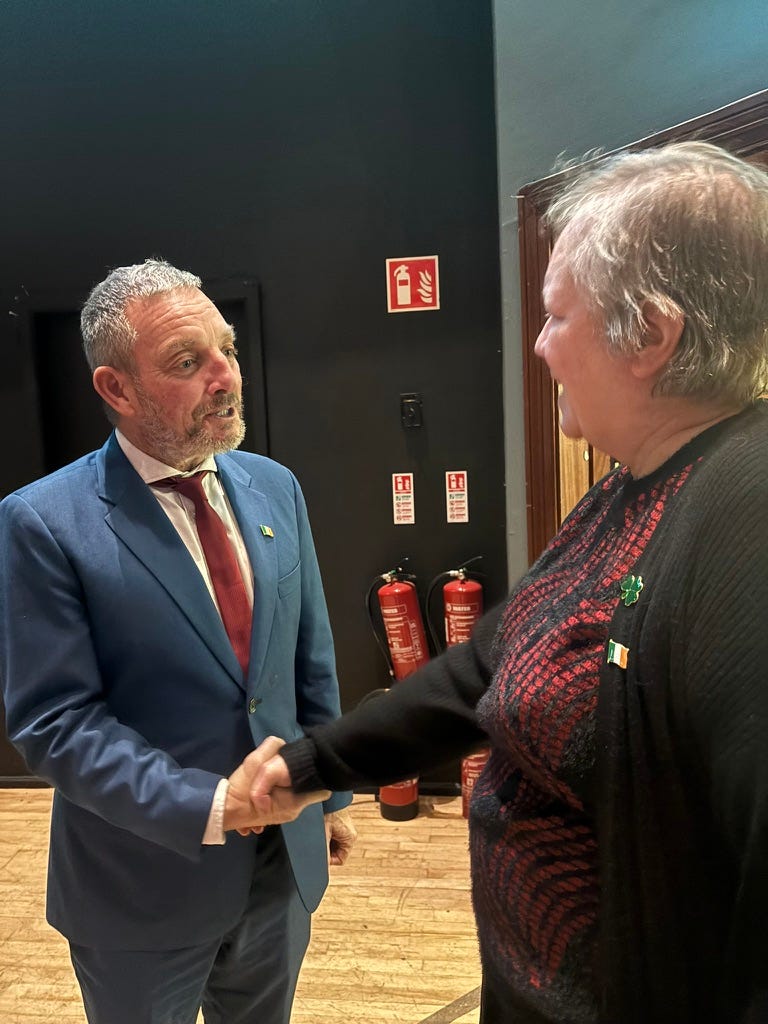
So I take the lesson from Jerry, my clan-brother, that in English, I’m home, and in Irish, I’m free.
Don and I enjoy your posts! They give us some insight as to what led you from California to Ireland! Just remember us and keep us updated on your adventures 🍀🎄🇺🇸
So proud of you.